Pan-African Gathering for Building Community Digital Futures

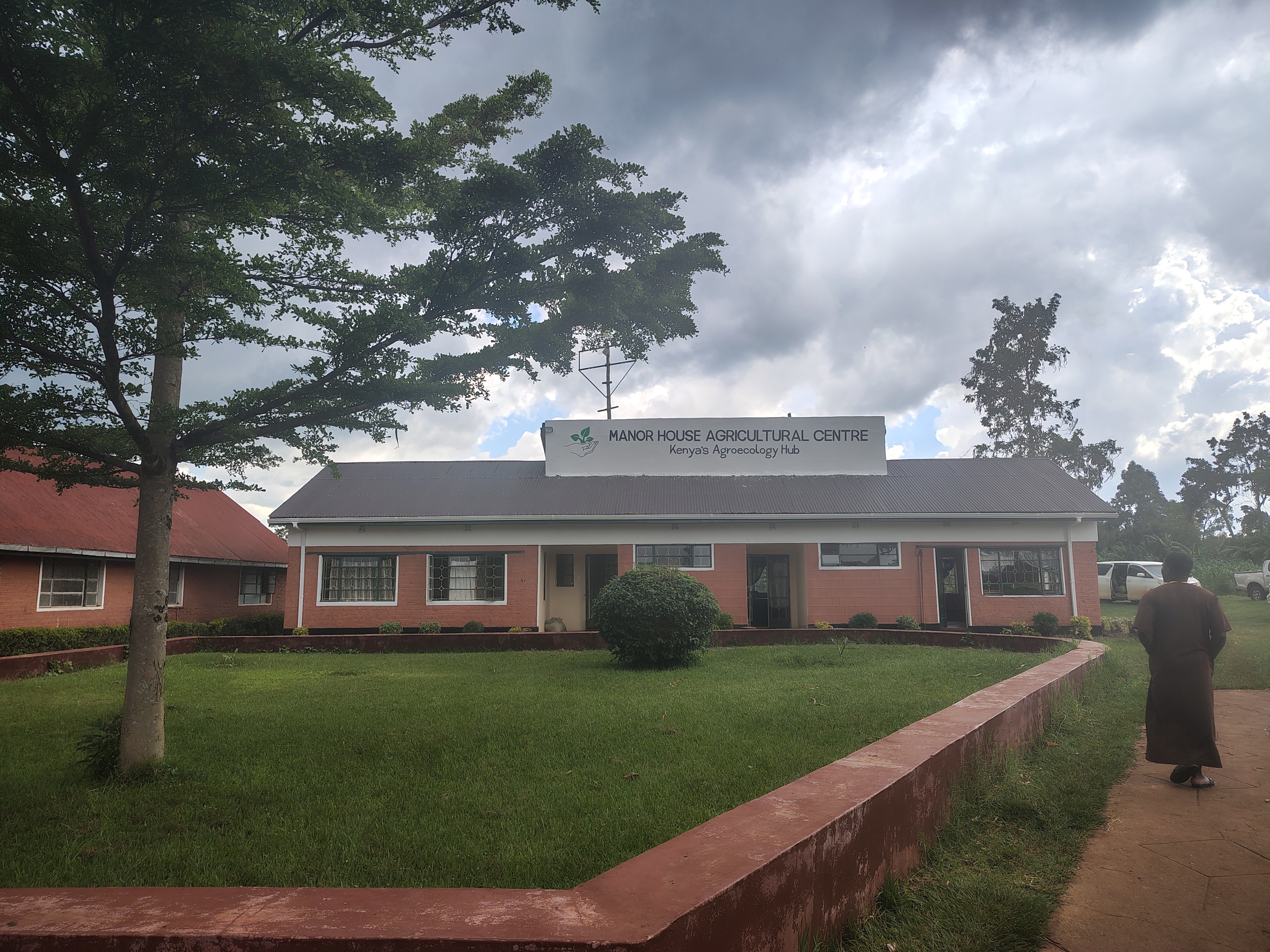
From May 15 to 18, 2026, we took part in the Pan-African Gathering for Building Community Digital Futures, at the Manor House Agricultural Training Centre, in Kitale, Kenya.
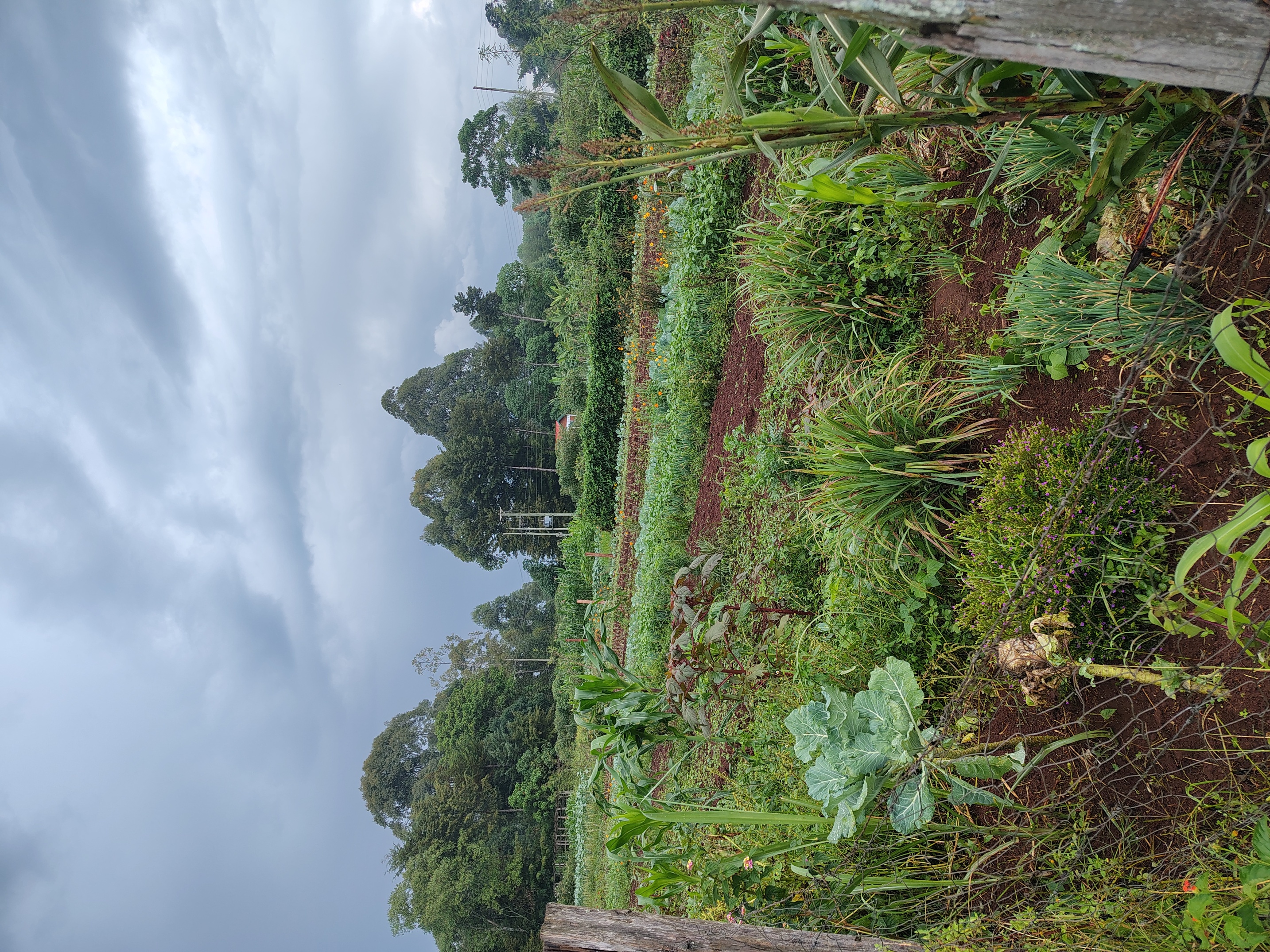
Before talking about the event, a note on the Manor House Agricultural Training Centre in Kitale, which has been running training processes related to technology in the field since 2014. They are based in the rural area of the city, and maintain different spaces for agroforestry, a vegetable garden, and egg and milk production. They apply different methods, aiming to experiment and teach people interested in agricultural production. The food served during the event was mostly grown there.
Description
This event was organized by IDEMS in partnership with INNODEMS, and was one of the projects funded by the first round of the Float community. The goal was to bring together people from across the African continent working with technology for agriculture, and to build a network to strengthen these developments, alongside members of the international community for support, exchange of experiences, and possible collaborations.
42 people from 17 countries attended: Ghana, Nigeria, Mali, Senegal, Burkina Faso, Cameroon, Tanzania, Ethiopia, Uganda, Kenya, Australia, Canada, Italy, the United Kingdom, the United States, Brazil, and the Netherlands.
The gathering had two focuses: reflections on guiding principles for technology development; and presentations of work already developed by those present — for reference and collaboration.
The guiding principles
From the first discussions, the group drafted a list of 10 principles meant to guide decision-making processes around the technologies being developed, following this theory of principles-focused evaluation.
Each principle consists of a short statement, 2 to 4 words long, and a concise description of about 2 lines. Each principle also comes with a counterpoint — legitimate propositions that represent values and assumptions different from the ones we're trying to support with these principles.
Among the list, we'd like to highlight one that deals with the scalability of the technologies developed:
Scale at the speed of trust, rather than growth-oriented design.
This principle was widely discussed, and raised questions about how to structure the projects and tools we build so they can be used by other communities. In these cases, how can these communities gain ownership of these tools?, and what business model makes sense to adopt, considering a genuine pursuit of changing power structures?
These are questions whose answers vary depending on context. They led us to think about the replicability of technologies, the concept of data extractivism, and the different logics and politics behind every "technical" decision made when building digital tools.
In the end, we were able to reaffirm our sense that community-owned technologies are political artifacts long before they are technical products.
Participants and the work presented
Besides the discussion activities around principles and concepts, the event also included 20-minute presentation slots about the work carried out by the people present, followed by 10 minutes of questions and discussion. In every presentation, the discussion time was lively and rich in reflections and contributions to the work.
Very diverse methods and technologies were presented, at different stages of experimentation and deployment. The work ranged from community commercialization platforms (like the one developed by the Kenya Peasants League), to low-cost open hardware kits for environmental and soil monitoring.
Some projects applied large language models and artificial intelligence, for example for agricultural advice (farmer chat) and digital inclusion of local languages, focused on preserving knowledge shared through orality (AI Mali).
The diversity of contexts represented was also a highlight. There were:
- state organizations, such as the Kenya Agricultural and Livestock Research Organization - KALRO and the Institut d'Économie Rurale du Mali - IER,
- universities, such as Abdou Moumouni University (Niger) and the University of British Columbia (Canada)
- grassroots community networks, such as the Kenya Biodiversity Association - BIBA, the Kenya Peasants League - KPL, the Tanzania Alliance for Biodiversity - TABIO, and the African Biodiversity Network - ABN
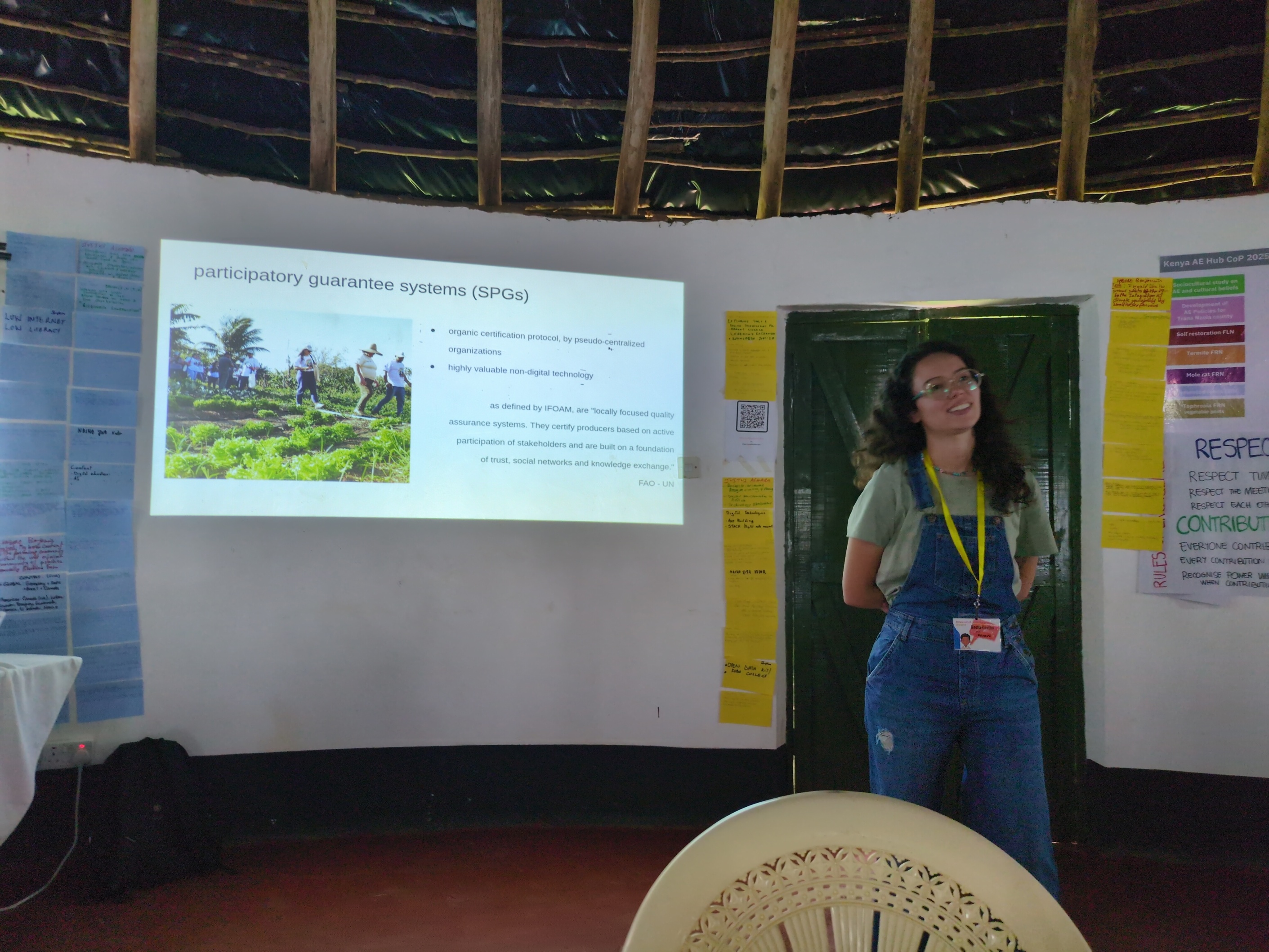
As for our presentation, we shared the methodology used in building speco, highlighting the political criteria behind our tool choices, and our proposal for technological sovereignty through building technical capacity, valuing diverse forms of knowledge, and craft-based development methodologies.
The slides we used are in English, here.
Conclusion
The gathering set out to bring together people building technology for agroecology, so that we could get to know each other and exchange experiences. Beyond that, through the activities and the attempt to arrive at the list of principles, it raised the proposal of reflecting on how we are building these technologies. In other words, a focus on method rather than on the final product.
We reflected on how we can sometimes get distracted, thinking that technologies, or digital tools, are the most important part of the work. But of course, to build a technological context that drives shifts in power dynamics, what matters most should always be the people and the processes they are part of.
Given where Tekoporã is right now, implementing the Speco system for the PGS forum, these exchanges strengthen us, and give us a sense of just how powerful practices aligned with the values of agroecology and buen vivir can be.